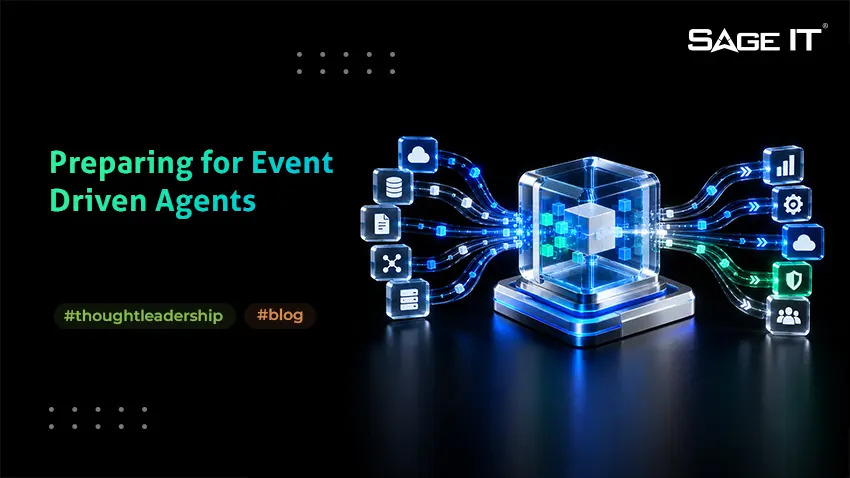



For any enterprise or organization modernizing legacy systems, CDC-based legacy modernization can support the transition toward Event Driven Architecture. EDA comes with several benefits like loose coupling, scalability and resilience, real time workflows, temporal decoupling, audit trail and replay and so on. EDA is generally best suited for ecommerce driven workflows, where orders go through the lifecycle of events, and some services receive sudden burst of events. However, before transitioning to EDA, regardless of the message queue platform, there are a few things to ensure if the services, team, and infrastructure are prepared for the migration. Moving to EDA is not just about swapping HTTP calls for Kafka topics or message queues. It is a fundamental paradigm shift in how we design, build, debug, and operate software.
Eventual consistency
EDA requires us to think asynchronously. Service A announces something happened and doesn’t care who listens or when they react. This sounds liberating, but it makes reasoning system behavior much harder. In the EDA world, data is eventually consistent. A user might update their profile, and it might take 500ms—or 5 seconds—for that change to propagate to the search index or the recommendation engine. We must become experts in patterns that handle inconsistency gracefully, such as the Saga pattern for distributed transactions and the Outbox pattern for reliable publishing. Every consumer you write must assume it might receive the same message twice.
Event schema
If Team A changes the structure of an event without telling Team B, Team B’s service crashes. In EDA, events are public interfaces. They are contracts. Breaking them has massive ripple effects. So, for any team trying to familiarize themselves with this shift, it’s best advised to start with non-critical flows, build muscle memory, and tooling before tackling core business paths. To prepare for this, a well-established Schema Registry is essential. You will not be able to publish an event that doesn’t validate against a registered schema. The teams will need to adopt testing practices where consumers define their expectations, ensuring producers don’t accidentally break downstream dependencies.
Idempotency
An operation is idempotent if it can be performed multiple times without changing the result beyond the initial application. In the world of events, it means Idempotency is no longer “nice to have”; it is a requirement for merging code. Most modern message brokers (like Kafka, RabbitMQ, or AWS SQS) prioritize reliability over perfect uniqueness. They guarantee “At-Least-Once” delivery. This means:
To prepare the organization, we need to move away from “blind” processing and toward “validated” processing.
Testing Challenges
Testing in an Event-Driven Architecture (EDA) is fundamentally different from testing synchronous microservices. In a REST-based world, you test a “handshake.” In EDA, you are testing a “broadcast.” In EDA, the time between a message being published and a consumer reacting to it is variable. Your tests may fail simply because the message broker was 10ms slower than usual. This leads to “Flaky Tests” where code passes in dev but fails in CI because of timing differences. To avoid this, move away from “Wait and See” (static sleep) and toward Temporal Assertions. Use libraries that allow you to say: “Assert that within 5 seconds; this database record eventually matches this state.”
Testing a business flow (e.g., “Order to Delivery”) requires verifying state across four different databases and three different message queues. Setting up this “world state” for an integration test is incredibly heavy. To avoid this, the teams must adopt technologies like Testcontainers. This allows developers to spin up a “disposable” instance of Kafka, Postgres, and Redis in Docker during the test run, ensuring every developer has a clean, identical environment.

Infrastructure complexity
Moving to an Event-Driven Architecture (EDA) means you are no longer just managing code; you are managing a distributed nervous system. This shift moves the “intelligence” of your system out of the services and into the infrastructure that connects them. In a REST world, your infrastructure is mostly “pipes.” In EDA, the pipes have logic, memory, and state. These additional elements of infrastructure include:
Message Bus (Kafka/RabbitMQ) – You now have to manage “Topics” or “Buses.” You must decide on partitioning strategies (how to group messages, so they stay in order) and retention policies (how long to keep data if a consumer goes offline).
Schema Registry – Think of this as a “compiler for your infrastructure.” It’s a central server (like Confluent Schema Registry) that ensures a producer can’t send a message that a consumer doesn’t know how to read. If the registry goes down, your whole system might stop accepting new data.
Distributed Tracing – Since events “hop” through a broker, you lose the standard web request to trace. You must implement OpenTelemetry across the board to “stitch” together the story of a single transaction.
Business Logic Visibility
In microservices with APIs, you can often see the business workflows in the endpoint definitions. With events, the flow is implicit in who publishes and subscribes to what. This makes it harder for new team members to understand how the system actually works.
In a synchronous microservices architecture, you have Orchestration: a central service (the conductor) tells others what to do. You can read the code and see the sequence.
In EDA, you have Choreography: each service reacts to events independently. There is no “master script.” This shift creates a phenomenon often called “The Invisible Spaghetti” or “Emergent Behavior.”
When the “flow” of a business process is spread across five different repositories, developers face three specific types of cognitive load. 1. Search Fatigue – To understand a single feature (e.g., “User Onboarding”), a developer must open multiple codebases, search for where an event is published, then search the entire organization’s GitHub for who subscribes to that specific string or schema. 2. Impact Blindness (Intrinsic Load): Developers are afraid to touch code. They might think, “I’m just adding a field to this ‘OrderCancelled’ event,” without realizing that a legacy service in a different department relies on that event and will crash if the schema changes slightly. 3. The “Locus of Control” Shift: In REST, the producer is in control (if I call you, you respond). In EDA, the consumer is in control. This reversal makes it incredibly difficult for a developer to answer the simple question: “What happens after I click this button?”
This requires preparation of tools and platforms to enable an effective Event Portal, where the developers can search and visualize the events and all its metadata. This also includes implementing distributed tracing using OpenTelemetry.
Debugging and Tracing Complexity
Following a request through synchronous API calls is relatively straightforward. With events, a single user action might trigger a cascade of events across multiple services, making it much harder to trace issues and understand what went wrong when things fail. In a synchronous system, a failure is usually a “Loud Crash”: an API returns a 500 error, the user sees a “Try Again” message, and the stack trace tells you exactly where the chain broke.
In an Event-Driven Architecture (EDA), failure is often a “Silent Disappearance”. A user clicks a button; the first service succeeds, but the fourth service in the cascade fails. The user sees a “Success” message, but their order is never actually shipped. Moving to EDA is a commitment to Observability as a First-Class Citizen. We can no longer afford to build a service and “add monitoring later.” If we can’t see the event cascade, we can’t trust the system.
Conclusion
While these challenges are significant, we will navigate this evolution successfully by taking an incremental approach and leveraging AI to bridge the complexity gaps. By utilizing AI-powered tools for automated schema generation, idempotency scaffolding, and intelligent trace analysis (LLM Log Analyzers), we can drastically reduce the cognitive load on our developers while ensuring system reliability. This strategy allows us to learn as we grow, transforming our architecture into a high-performance ecosystem that delivers more value to our customers with less manual overhead.