
Reference Center

RBAC is the right foundation for enterprise AI agents, but a static role granted once becomes standing privilege for a non-human identity that acts across systems. Learn how least-privilege RBAC, attribute-based context, and per-action policy gates combine to authorize agents at the point of action, above any iPaaS.
MCP-enabled integration uses the Model Context Protocol, the open standard Anthropic released on November 25, 2024 and now supported by OpenAI, Google, and Microsoft, to let AI agents connect to enterprise systems such as NetSuite, Salesforce, and SAP through MCP servers.
Enterprise AI agent governance fails when it stops at a policy document and model guardrails. Because agents act across systems, control has to move to the execution layer. Learn the frameworks that apply, the six controls every agent needs, and how a governance control plane enforces them above any iPaaS.
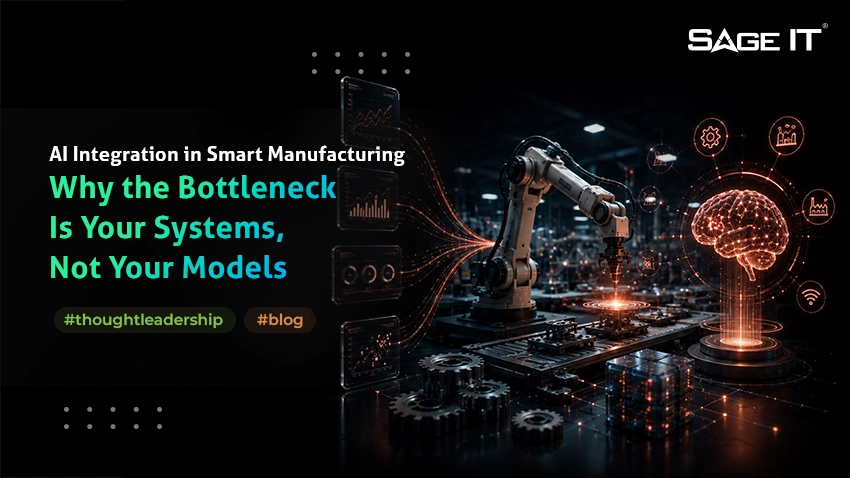
To integrate AI in smart manufacturing, connect factory-floor (OT) data to business (IT) systems through a governed integration layer, then let AI act across those systems rather than inside one.
AI agents can speed SDLC delivery, but enterprise teams need governance, human review, and CI/CD controls to reduce defects and release risk.
Learn how to reduce enterprise integration costs by attacking maintenance, point-to-point sprawl, and platform misfit. See when Sage IT’s SHIP AI helps migrate TIBCO and MuleSoft estates to AWS, Azure, SAP BTP, or Boomi at 50% lower migration cost and 60% faster delivery.
Integrate AI agents with NetSuite using Oracle’s AI Connector Service and MCP Standard Tools, and learn when Sage IT’s NS-AIF fits cross-system enterprise workflows.