
“Most of the B2B transactions still depend on legacy systems, creating delays in processes like partner onboarding, data exchange, and document tracking. These outdated systems require manual intervention and add complexity, increasing operational costs and slowing business growth. IT teams constantly face challenges in managing these inefficiencies while balancing compliance, scalability, and the need for seamless integration.
Boomi EDI provides a cloud-native solution to address these issues. By automating manual processes, Boomi supports real-time data transformation across various formats, ensuring smooth, accurate transactions. IT professionals can manage multiple trading partners, maintain compliance with standards like X12 and EDIFACT, and gain full visibility into the entire transaction lifecycle.
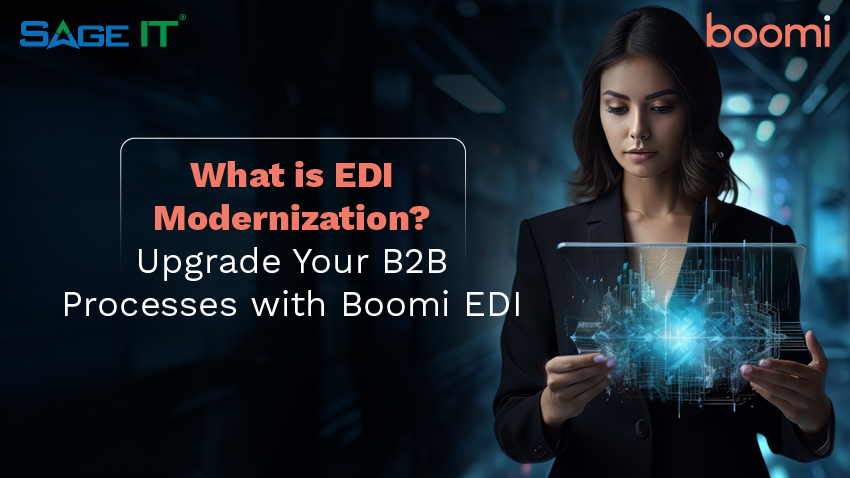
What is EDI Modernization and Why is it Important?
EDI modernization involves shifting from legacy on-premises systems to cloud-based platforms that provide greater scalability and flexibility. These updated systems allow businesses to manage increased transaction volumes, handle multiple trading partners, and meet compliance requirements without the limitations of outdated infrastructure. By adopting modern, cloud-based solutions, companies can seamlessly integrate their EDI processes with other key business systems.
B2B operations demand speed, accuracy, and automation to remain competitive. Legacy EDI systems often slow down processes, leading to manual data entry, delays in document exchanges, and higher costs. In addition, outdated systems struggle to maintain compliance with global standards, creating operational risks. Businesses relying on legacy systems often face higher error rates and slower transactions, which hinder their ability to keep pace with modern demands.
What are the Benefits of Modernizing with Boomi?
1. Scalable Infrastructure for Growth
You know how it goes—business growth is exciting, but as transaction volumes increase, your systems start to feel the strain. The process of onboarding new partners slows down, and legacy systems can’t keep up with the pace of demand. Many teams are forced to invest in costly infrastructure upgrades or make do with outdated systems that just don’t have the capacity. With Boomi, this becomes a non-issue.
Its cloud-based platform adjusts to the demands of your growing business, whether you’re adding new trading partners or processing larger volumes of data. There’s no need for major system overhauls, so you avoid costly disruptions and keep scaling without limitations.
2. Automated Workflows to Minimize Manual Effort
When your team spends hours on repetitive tasks like partner onboarding or handling document exchanges, it takes away from their ability to focus on more important business needs. And let’s be real—manual data entry is always risky.
Mistakes creep in, delays pile up, and the entire process feels inefficient. Boomi automates these processes, cutting down the chances for error. The result is faster transactions, fewer errors, and a team that isn’t bogged down by routine tasks. You won’t have to worry about things slipping through the cracks anymore.
3. Centralized Control with Real-Time Visibility
Have you ever felt like you’re chasing down information from multiple systems, trying to figure out where a transaction went wrong or which document is causing delays? It’s frustrating and it wastes time.
Boomi solves this by offering a single, centralized view of all your B2B transactions and partner activities. With real-time monitoring, you can see what’s happening across your network at any moment, identify issues early, and resolve them before they escalate. No more running between systems or waiting days to fix an error that could have been caught immediately.
4. Compliance with Global EDI Standards
Dealing with various EDI standards—whether it’s X12, EDIFACT, or something else—across different partners can feel like juggling too many balls. Each partner has their own requirements, and the smallest mistake can lead to rejected transactions or worse, regulatory trouble. Trying to manually keep up with those varying standards puts a lot of pressure on your team.
Boomi simplifies compliance by supporting all major global EDI standards, so you don’t have to worry about falling behind. It ensures your transactions are processed correctly, and partners receive exactly what they need—without your team having to micromanage the details.
5. Reduced Costs and Faster Time-to-Value
Legacy systems can drain your budget faster than you’d like. Between maintenance fees, long onboarding cycles, and the need for constant oversight, it becomes a challenge to control costs. Partner onboarding, which should be a straightforward process, can sometimes take weeks, causing delays and added expense.
Boomi’s pricing model simplifies things by charging based on the number of partners, not transaction volume, making your costs more predictable. Onboarding new partners can be completed in hours, not weeks, so you’re up and running faster, driving operational efficiency without the constant worry about ballooning costs.
How to Modernize Your B2B Processes with Boomi EDI
Step 1: Review Current Systems for Gaps
- Begin by evaluating your current B2B systems. Look for any areas where data processing or partner management is slowing down your business.
- Identify areas of concern, such as manual processes, compliance challenges, or delays in partner onboarding.
○ Tip: If your system reveals gaps in scaling or compliance, it’s time to consider modernization.
Step 2: Set Up Boomi’s Pre-Built Connectors for Seamless Integration
- Access Boomi’s integration platform to connect your existing ERP, CRM, SCM, or legacy systems without manual coding.
- Use the pre-built connectors to streamline data flow between your systems and partners.
○ Note: Boomi’s low-code environment makes it easy for your IT team to quickly configure integrations.
Step 3: Automate Partner Onboarding and Transactions
- Enable Boomi’s self-service onboarding portal to speed up partner onboarding. This will reduce the need for manual IT intervention.
- Set up automated workflows for document exchanges and transactions, ensuring accuracy and compliance across all interactions.
○ Pro Tip: Automation here cuts down on errors and speeds up B2B processes without manual oversight.
Step 4: Use Data Transformation Tools for Consistent Data Management
- Leverage Boomi’s data transformation tools to manage various data formats, including EDI, XML, and flat files. This removes the need for manual data conversions.
- Ensure that all transactions are converted properly between systems, avoiding potential delays or miscommunications.
○ Tip: Automating data transformation minimizes errors and keeps your operations running smoothly.
Step 5: Monitor and Refine Your B2B Processes
- Use Boomi’s real-time dashboards to monitor transactions, spot potential issues, and make adjustments as needed.
- Regularly check system performance to ensure that all processes run smoothly and partners are onboarded efficiently.
○ Pro Tip: Regular monitoring allows you to spot any discrepancies in data or system performance before they impact your operations.
Strategies for Successful EDI Modernization with Boomi
Automated Partner Onboarding
Boomi’s platform supports multiple trading partners in a single process, managing varied compliance needs without adding complexity. This reduces the time and effort required to handle different partner standards.
Real-Time Monitoring
Boomi offers real-time dashboards to monitor transactions and troubleshoot issues immediately. These tools provide clear visibility, keeping operations smooth and minimizing errors.
Continuous Optimization
Boomi’s reporting and analytics tools track performance and reveal process bottlenecks. These insights help you adjust and improve your B2B systems, keeping everything running smoothly over time.
How to Migrate to Boomi EDI: A Step-by-Step Guide
Migrating from a legacy system to Boomi EDI involves a structured approach that reduces risks and helps manage the process smoothly.
Step 1: Assess Existing EDI System
Start with a thorough review of your current EDI system. Identifying weaknesses and challenges will help prioritize the focus areas during migration.
Step 2: Plan Migration with Boomi Experts
After completing the system review, collaborate with Boomi experts to create a migration plan that aligns with business goals. Boomi provides detailed tools and resources to support this process.
Step 3: Use Boomi’s Pre-Built Connectors for Smooth Integration
Boomi’s pre-built connectors help integrate existing ERP, CRM, and SCM systems without requiring complex configurations.
Step 4: Automate Processes During the Migration
Minimizing manual efforts during migration is key to ensuring smooth operations. Boomi’s platform facilitates this by automating essential EDI processes.
Step 5: Go Live with Boomi Support
Once testing is complete, proceed to launch the Boomi EDI platform. During this phase, ongoing support ensures the team manages the new system effectively.
Conclusion
Boomi’s EDI platform enables B2B transactions to move effortlessly across systems, with partners onboarded swiftly and compliance concerns eliminated. This allows businesses to scale with ease, automate complex workflows, and adapt to changing demands smoothly. Boomi goes beyond simplifying processes, creating a framework that drives both innovation and agility.
This platform aligns with your tech roadmap, offering control over each transaction while reducing manual efforts and risks. Whether for integration or secure data management, Boomi delivers the tools your business requires to excel in the digital environment.
Looking to upgrade your EDI processes? Our boomi consultation offers clear steps to modernize your strategy, customized to your business needs.”