

Enterprise AI has moved well beyond the demo stage. Today, the real question is not whether a large language model can generate fluent answers, summarize documents, or automate routine work. The real question is whether those systems can operate safely inside environments where policy controls, data sensitivity, and auditability matter as much as model performance.
That shift is especially important in regulated industries. Financial institutions must prevent data leakage while maintaining strict internal controls. Healthcare organizations are trying to modernize workflows without exposing regulated information or increasing cybersecurity risk. At the same time, the compliance landscape around AI is becoming more concrete. The EU’s AI Act obligations for providers of general-purpose AI models began applying on August 2, 2025, and NIST’s Generative AI Profile gives organizations a practical framework for identifying and managing GenAI-specific risks.
In that environment, the old model of “generate first, filter later” is no longer enough. Post-hoc filtering may reduce some visible failures, but it does not create a trustworthy AI architecture. It creates only the appearance of safety after risky input, sensitive context, or harmful action paths have already entered the workflow.
Why Post-Hoc Filtering Breaks Down in Production
Bolt-on filtering is appealing because it seems simple. Put a moderation layer after the model, inspect the final answer, and block anything unsafe. The problem is that this approach intervenes too late.
By the time an output filter runs, the model has already processed the prompt, combined it with retrieved context, and generated a response. If a user attempted prompt injection, submitted sensitive information, or manipulated the system into unsafe reasoning, the risk has already moved through the workflow. Output filtering may catch part of the result, but it does not address the point where the problem began.
That weakness becomes even more serious in agentic systems. Unlike simple chatbots, AI agents retrieve knowledge, call tools, generate code, and participate in business processes. In those environments, a safety layer that activates only at the end is not governance. It is damage control.
Our solution, Archestra Governance and Safety, proactively addresses potential risks by embedding native safety guardrails throughout the entire agent lifecycle, from input to output. This approach ensures that AI systems are safeguarded from the very beginning, rather than reacting only after issues have emerged.
By moving policy enforcement closer to where risks originate, our solution ensures a more comprehensive, real-time approach to security. With policy-driven controls applied at every stage, Archestra helps you maintain secure, compliant, and trusted AI systems, allowing you to focus on driving innovation while we handle the operational risks.
Why Native Guardrails Change the Design
If the weakness of bolt-on filtering is that it reacts after risk has already entered the system, the answer is not just stricter filtering. The answer is to move policy enforcement closer to where risk begins.
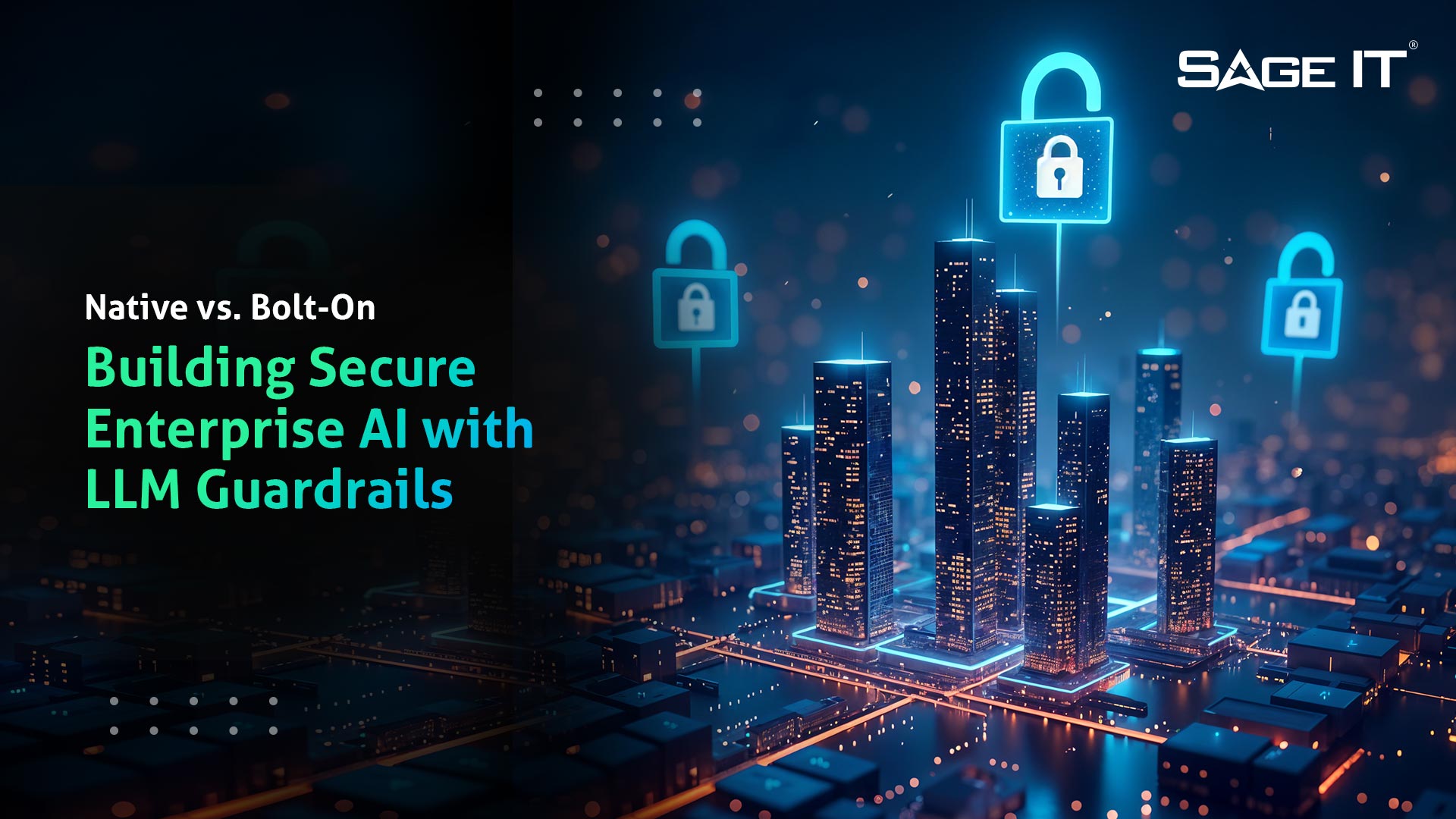
Native guardrails do exactly that. Instead of checking only the final response, they enforce safety across the agent lifecycle: at input, during reasoning or tool use, and again at output. That changes guardrails from a reactive content screen into a runtime control layer.
This matters because enterprise AI systems are no longer passive text generators. They are increasingly becoming decision-support and workflow-execution systems. As that shift happens, safety has to evolve as well. The real requirement is no longer content moderation alone, but policy-aware control over how the system behaves before an unsafe action or disclosure can occur.
OWASP’s 2025 guidance on LLM application security reflects this same reality, highlighting risks such as prompt injection and sensitive information disclosure as central concerns for production AI systems.
Every Agent Needs Its Own Policy Profile
A common enterprise mistake is to apply a single generic safety policy to every AI use case. That may be acceptable in a pilot, but it becomes brittle in production.
A coding assistant, an internal knowledge agent, a healthcare intake assistant, and a finance operations copilot do not carry the same risk profile. They interact with different data, use different tools, and create different kinds of outputs. Treating them all the same makes guardrails either too weak to matter or too rigid to be useful.
That is why per-agent policy profiles are essential. Each agent should have controls tailored to its function, access level, and business context. In practice, those controls typically include input guards, output guards, and response actions such as block, warn, or redact.
Input guards evaluate prompts before processing begins. They help detect prompt injection attempts, policy-violating instructions, or sensitive data submissions before those inputs affect reasoning. Output guards inspect model responses for leakage, unsafe content, prohibited advice, or risky code. Response actions then determine how the system should behave. A hard policy violation may require a block, a lower-confidence issue may justify a warning, and sensitive content may call for redaction rather than rejection.
This is where native safety becomes operationally useful. It allows enterprises to align guardrails with the actual role of the agent rather than forcing every workload into the same blunt control model.
The Performance Question Matters
Of course, once guardrails move deeper into the runtime, the next question is operational: what does this do to latency?
That is a fair concern, and technical teams will raise it immediately. Native guardrails do add processing overhead. But in well-designed systems, that overhead does not have to become a user-experience problem.
In practice, performance is managed by using lightweight classifiers for fast policy checks, running independent checks in parallel where possible, and applying heavier inspection only to higher-risk workflows. Some controls need to execute synchronously, while others can be tiered or optimized based on the type of interaction. The goal is not to eliminate overhead entirely, but to ensure that policy-aware safety does not introduce unnecessary drag.
That distinction matters. The real tradeoff is not safety versus speed. It is whether the system is architected intelligently enough to support both.
The Guard Library Enterprises Actually Need
Defining the right controls is only half the challenge. Enterprises also need clarity on which risks those controls are meant to mitigate.
A mature guardrail strategy works best as a guard library, where each control maps to a distinct category of risk. Four categories stand out as especially important for production LLM systems:
| Guard Type | Primary Risk | Enterprise Value |
|---|---|---|
| PII Detection | Exposure of personal, financial, or health data | Supports privacy, redaction, and regulatory readiness |
| Prompt Injection Shield | System override attempts, jailbreaks, malicious instruction chaining | Protects workflow integrity and tool behavior |
| Content Moderation | Harmful, prohibited, or policy-violating outputs | Reduces legal, brand, and user-trust risk |
| Code Safety | Insecure code, risky commands, secrets exposure | Protects infrastructure and software delivery pipelines |
This is not just a theoretical framework. It reflects the risk patterns organizations are already confronting. Healthcare is a good example. HHS issued a proposed update to the HIPAA Security Rule on December 27, 2024, aimed at strengthening cybersecurity protections for electronic protected health information. That kind of regulatory pressure makes controls like redaction, logging, and access-aware enforcement much more than technical preferences. They become operational requirements.
Policy Inheritance is What Makes Governance Scalable
Once an organization begins deploying multiple AI solutions, the next challenge is scale. Even the best guard library becomes difficult to manage if every team configures every control manually.
This is where policy inheritance becomes critical. A hierarchy of org → solution → agent allows enterprises to define baseline rules once, apply workflow-specific controls where needed, and still tailor restrictions for individual agents.
At the organization level, teams can define universal requirements such as approved model usage, privacy controls, prohibited categories, and mandatory audit logging. At the solution level, they can apply more specific rules for workflows such as customer support, claims processing, or document review. At the agent level, they can impose tighter constraints based on access rights, tool permissions, or domain risk.
The benefit is not just consistency. It is operational discipline. Inheritance reduces duplication, limits policy drift, and lets teams move faster without rebuilding the safety framework every time a new agent is introduced.
Auditability is What Turns Safety Into Trust
Guardrails matter far less if their actions cannot be inspected later. For enterprise AI, safety is not only about preventing bad outcomes in real time. It is also about being able to show what happened, why it happened, and which control was responsible.
That is where auditability becomes essential. A mature AI system should log which policy fired, what triggered it, and whether the resulting action was a block, warning, or redaction. Those records support internal governance, incident review, customer assurance, and regulatory scrutiny.
This is also where today’s governance direction is unmistakable. The EU framework for general-purpose AI models emphasizes transparency, safety, and accountability, while NIST’s GenAI Profile pushes organizations toward structured risk management rather than ad hoc safeguards.
For high-trust environments, that level of traceability is not optional. An AI system handling financial documents or healthcare data cannot simply be assumed to be safe. It has to be demonstrably governable.
What Good Looks Like in Practice
The value of this model becomes clearer in a real workflow.
Consider a claims-processing assistant in an insurance environment. A user submits a request containing personally identifiable information and asks the agent to summarize the claim, verify policy eligibility, and draft a response.
In a bolt-on filtering model, the system may process the request end to end and inspect only the final output. In a native guardrail model, the input guard first identifies sensitive data, the policy profile determines what information can be retained or redacted, tool access is restricted to approved systems, and the output guard ensures that no disallowed details appear in the final response. The system then records which policies were triggered and what actions were taken.
That is what enterprise-grade trust looks like. Not a filter layered on top of the system, but policy-aware control embedded throughout it.
The Real Next Step for Enterprise AI Teams
Enterprise AI will not succeed simply because models become more capable. It will succeed because the systems around those models become more controllable, more auditable, and more aligned with business risk.
That is why LLM guardrails are not optional. And it is why native safety will outperform bolt-on filtering in any environment where trust, compliance, and operational integrity matter.
For organizations moving from AI pilots to production agents, the next step is not to add another moderation layer and hope for the best. It is to assess whether safety is truly part of the architecture or merely a reaction at the edge. Sage IT helps enterprises design native, policy-driven guardrails that support compliance, auditability, and production-scale trust across real business workflows.