
IoT Integration Services
Intelligent Operations That Understand, Predict and Respond
We connect your existing machines, OT, edge, cloud, and enterprise systems so critical signals reach the right workflow with the context needed for the right operational response.
Keep What Already Runs
Existing OT stays in play.
Close the Signal-to-Response Gap
Machine events reach the workflow that needs to respond.
Scale Without More Integration Debt
New devices and sites reuse a proven integration pattern.
Enterprise Delivery Strength
Enterprise Technology Delivery
Fortune 1000 Customers
Integration Modernization Accelerator
Connected Operations Blockers
Why do your connected devices still not create connected operations?
If every device change creates downstream work, alerts still need manual follow-up, or each new site adds another integration path, we read that as one architecture problem: too many dependencies have spread across your operational environment.
A Device Change Should Stay a Device Change
When firmware or payload changes reach business applications, we separate that variation behind a stable integration boundary.
Your Machine Event Should Finish the Workflow
We carry the right asset and operating context into maintenance, production, inventory, or service systems so the event can trigger action.
Every Signal Does Not Need the Cloud
We keep time-sensitive processing close to operations and send upstream only what other systems need.
Your Next Site Should Reuse the Pattern
We contain differences in vendors, firmware, and networks so expansion does not create another custom integration estate.
Are Your Machine Signals Losing Context Before They Reach the System That Needs to Respond?
If every device change creates downstream work, alerts still need manual follow-up, or each new site adds another integration path, we read that as one architecture problem: too many dependencies have spread across your operational environment.
How We Solve It
One Integration Path From Asset to Enterprise Action
We connect each handoff in your operational flow so device data can move reliably from the physical environment into the systems that need to interpret, decide, and act.
Assets / PLC / SCADA
Protocol & Device Layer
Edge Processing
Events & Messaging
Operational Context
Cloud / IoT Platform
ERP / MES / CMMS / Data / AI
Action
Connect Existing Operations Without Replacing What Works
Keep production running while bringing existing machines, controllers, and OT systems into modern workflows.
We work around PLC, SCADA, protocol, network, and uptime constraints, keeping time-critical processing local where needed and creating controlled paths for the data that needs to move upstream.
Turn Device Data Into Operational Action
Get machine events into the systems that can respond, rather than leaving operators to interpret dashboards and complete the next step manually.
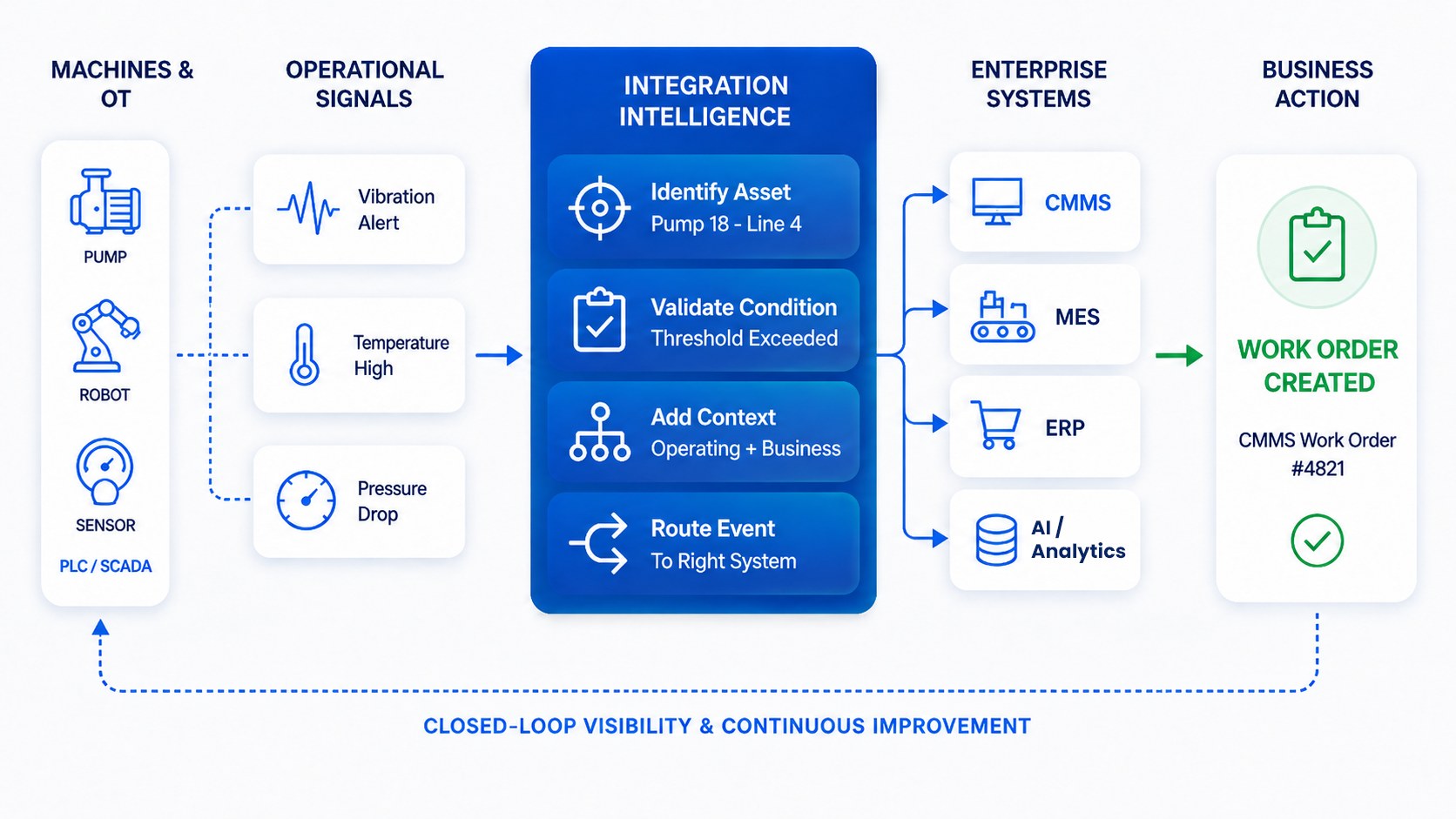
We normalize device-specific signals, add asset and operating context, and route the resulting event into ERP, MES, CMMS, analytics, or AI without pushing device complexity into downstream applications.
Modernize the Integration Layer Behind IoT
Expand connected operations without letting aging middleware, custom interfaces, or tightly coupled APIs become the next scaling constraint.
Where those dependencies already exist, we use SHIP AI where applicable to assess legacy flows, modernize repeatable patterns, and avoid placing new IoT traffic onto brittle integration paths.
Keep the Environment Working After Go-Live
Add devices, sites, and use cases without turning firmware changes, expired certificates, network loss, or payload changes into wider operational incidents.
We design for buffering, retry and replay, identity, certificate lifecycle, observability, schema change, and repeatable onboarding before those conditions become production-scale problems.
Move From Monitoring to Predictive Action
Use connected operations to respond earlier, reduce manual intervention, and progress toward predictive and closed-loop workflows where the use case supports them.
We give analytics and AI trusted operational context and connect their outputs to controlled business actions, so prediction can lead to a reliable operational response.
IoT Integration Case Study
Improving Asset Reliability With IoT Across Global Manufacturing Operations
Reduction in unplanned asset downtime
Global Manufacturing
Automotive, Power Generation, Oil & Gas, Marine, and Aerospace
Global operations, including 12 large-scale manufacturing facilities in India
Reduce unplanned asset downtime and improve asset performance
Brownfield Integration
Keep What Runs. Modernize How It Connects.
How we do it without destabilizing existing OT.
Extend the value of the machines, PLCs, SCADA, gateways, and long-lifecycle OT already running your operation without making replacement or production disruption the starting point.
We introduce controlled integration boundaries around existing OT, work within uptime and network constraints, and keep time-sensitive processing close to the plant while moving only the business-relevant events upstream.
Keep Critical Processing Local
Protect response time and production continuity by placing filtering, buffering, and time-sensitive execution near the operation when latency, network loss, or raw-data volume makes upstream processing risky.
Move Business-Relevant Data Upstream
Connect contextualized operational events into cloud platforms, enterprise systems, analytics, and AI without exposing production systems directly or sending every raw signal beyond the plant.
Operational Data
Turn Device Signals Into Business Action
How a raw signal acquires identity and business context.
Move machine events into the ERP, MES, CMMS, WMS, analytics, or AI workflow that needs to respond, with enough asset and operating context to determine what should happen next.
Data Flow
Integration Modernization
Remove the Integration Bottlenecks IoT Exposes Downstream
How we stop legacy integration from becoming the new bottleneck.
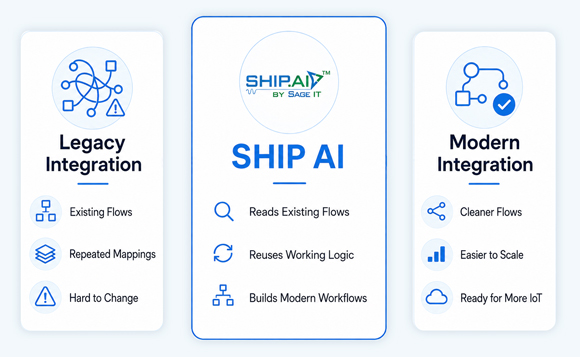
Expand IoT workflows without pushing more operational traffic through legacy middleware, custom interfaces, aging iPaaS flows, or tightly coupled APIs that already struggle with change.
We trace where events slow, duplicate, or become hard to maintain after leaving the IoT layer. Where applicable, we use SHIP AI to assess legacy integration logic, surface reusable patterns, and accelerate modernization before more device volume compounds the problem.
Standardize What Repeats
Turn recurring connectors, event structures, schemas, transformations, and monitoring patterns into reusable integration building blocks instead of rebuilding them for every new flow.
Adapt Where Operations Differ
Keep asset models, equipment behavior, site constraints, workflow logic, and operating rules flexible so standardization does not erase the differences that matter on the floor.
Production Readiness
Keep Your IoT Environment Working as Everything Around It Changes
How the operating path survives firmware, certificates, networks, APIs and scale.
Add devices, sites, and downstream applications without routine changes becoming integration incidents.
Firmware updates, expired certificates, network loss, payload drift, offline devices, and unavailable APIs are normal Day-2 conditions, so we build recovery, trust, visibility, and change controls into the environment before scale exposes the gaps.
Keep Events Moving
We build buffering, retry, replay, ordering, and recovery paths so temporary network or application failures do not break the operational flow.
Keep Devices Trusted
We manage device and gateway identity, credentials, certificates, authorization, segmentation, and revocation as the fleet changes over time.
Find Failures Before Teams Chase Them
We instrument devices, connectors, message flows, and downstream dependencies so your teams can see where the path failed instead of tracing it manually.
Connected Operations Maturity
Move From Operational Visibility to Predictive Action
How connected context moves toward prediction and controlled response.
Many IoT programs can detect a condition but still leave someone to interpret the alert, switch systems, and trigger the response manually.
We connect trusted operational data, business context, analytics or AI, and governed execution so predictions can move into approved actions and, where appropriate, closed-loop optimization.
See
Real-time operating state
Understand
Asset and operational context
Predict
Likely failure or exception
Act
Approved enterprise or operational workflow
Optimize
Closed-loop adjustment where controls permit
Delivery Model
Move From Your Current Environment to Production Without Scaling the Unknowns
Prove the integration path before expanding it across fleets, sites, and business workflows. We reduce uncertainty around devices, protocols, networks, data, security, and failure behavior at each stage so scale follows evidence rather than assumptions.

Map
Trace the devices, protocols, networks, applications, data flows, dependencies, and operating constraints shaping the current environment.

Architect
Define the integration boundaries, edge/cloud placement, event model, security controls, and enterprise destinations around those constraints.
Validate
Test representative devices, network conditions, failure scenarios, and the actual downstream workflow before wider rollout.

Integrate
Build the complete operational path across assets, edge, data services, cloud platforms, and enterprise applications.

Scale
Extend the proven pattern across additional sites, device groups, and use cases without reopening the core architecture every time.

Operate
Establish the visibility and ownership needed to manage dependencies, data quality, performance, and change after launch.
Integration Fit
Work With the Technology Your Operations Already Depend On
Keep your existing OT, edge, cloud, and enterprise platforms in play without reshaping the environment around one preferred IoT stack. We work across the layers already carrying your workloads and choose the integration pattern based on where the data, dependency, latency, and operating constraint actually sit.
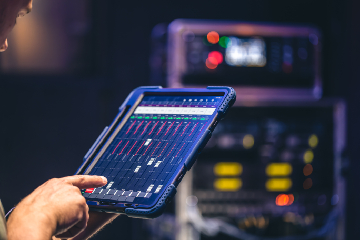
Industrial / OT
OPC UA | Modbus | MQTT | Validated protocols and systems

Edge
Validated gateways and runtimes

Integration / Events
APIs | Middleware | Event Brokers
Cloud
AWS | Azure | Google Cloud
Enterprise
ERP | MES | CMMS/EAM | WMS | Custom Applications
Data / AI
Validated analytics and AI platforms
FAQs
Questions We Resolve Before You Commit to the Integration Path
Before you scale the program, we help you remove the decisions that usually create risk later, from brownfield equipment and device change to enterprise workflow fit and multi-site rollout.
Often, yes. We assess what can remain stable, how its data can be exposed safely, and where gateways or integration boundaries can extend existing OT into modern workflows without making replacement the default.
We isolate firmware, payload, and device variation behind controlled interfaces, manage schema and version changes, and monitor dependencies so downstream applications are less exposed to endpoint-level change.
Yes. We add the asset and operating context the receiving system needs, then route the event into the workflow responsible for the next business or operational action.
We identify what can become a repeatable deployment pattern, then account for device identity, onboarding, site networks, failure handling, observability, version differences, and Day-2 ownership before expanding the rollout.