

Let me start with something uncomfortable.
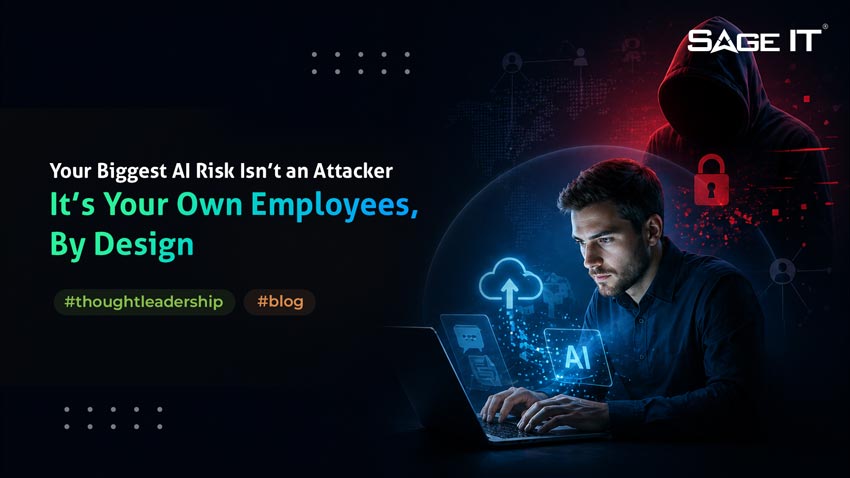
Your employees used unauthorized AI tools today. They will use them again tomorrow. And there is a very real possibility that sensitive data from your organization has already passed through systems you neither control nor fully understand.
Not stolen. Shared.
A product manager pastes confidential data into ChatGPT to “summarize faster.” An engineer connects an AI coding assistant to private repositories using a personal API key. A finance analyst uploads board-level projections into an AI tool to “double-check the numbers.” None of these actions feel risky in the moment. In fact, they feel productive.
That is precisely the problem.
The Reality Most Organizations Are Missing
In most environments we assess, leadership believes AI usage is controlled.
It rarely is.
What actually exists is a growing layer of tools, integrations, and data flows that operate outside formal governance, expanding faster than security visibility.
You are not managing AI risk. You are discovering it after the fact.
This Is Already Costing You
This is not theoretical.
A meaningful percentage of organizations have already experienced incidents linked to unauthorized AI usage, often with direct financial impact. In most cases, the issue was not lack of security investment, but lack of visibility into how AI was being used.
What makes this different from traditional breaches is that it is not driven by attackers.
It is driven by intent to be more efficient.
How This Actually Plays Out
Consider three common scenarios.
A developer integrates an AI coding assistant into internal repositories. The tool gains persistent access through credentials that are never rotated or audited. A single leak exposes the entire codebase.
A marketing team connects an AI platform to a CRM system. Permissions expand gradually over time. Sensitive customer and revenue data begins flowing into external systems without review.
A finance analyst uploads board-level material into an AI tool whose terms allow data retention. That content may include strategic initiatives or material non-public information.
These are not edge cases.
They are everyday decisions.
Why Your Security Stack Cannot See This
Traditional security systems are designed to detect malicious activity.
Shadow AI is not malicious activity.
It is legitimate usage in unintended ways.
Your SIEM sees outbound traffic, but not the context of what is being shared. Your CASB may detect the application, but not how permissions evolve. Your DLP tools scan for patterns, but are not built to interpret AI interactions or API-level data flows.
This is not a tooling failure.
It is a model mismatch.
The Hidden Layer: Non-Human Identities
Every AI tool introduces machine-level access, API keys, OAuth tokens, and service accounts.
These identities often outlive projects, accumulate permissions, and operate without continuous review. Increasingly, they are the mechanism through which enterprise data moves into AI systems.
And in most organizations, they remain largely untracked.
The Most Uncomfortable Truth
The greatest risk is not an external attacker.
It is a trusted employee using an unapproved AI tool, with legitimate access to sensitive data, making a decision that feels efficient rather than risky.
And your organization has little to no visibility into it.
In most enterprises today, AI is already embedded in workflows, just not governed.
What Needs to Change
The Question That Matters
The question is not whether you have a shadow AI problem.
You do.
Every enterprise does.
The real question is: