

Every major enterprise platform now ships a capable AI agent. Not one of them can finish a process that crosses your stack. That gap, not the intelligence, is the thing you are actually shopping for in 2026.
The native agents are real, and they are good
Start by being honest about where we are, because the lazy version of this argument is already wrong. Salesforce has shipped Agentforce since October 2024 and reached its current generation, Agentforce 360, in October 2025, with more than twelve thousand customer implementations behind it. In April 2026 it added Agentforce Operations, an agent built for multi-step back-office work. ServiceNow launched its Autonomous Workforce, a set of AI specialists coordinated by an AI Agent Orchestrator, with its first service-desk specialist expected to reach general availability in 2026. NetSuite is rolling out Ask Oracle and its SuiteAgents framework as part of NetSuite Next, with North American general availability expected through the middle to back half of 2026.
These are not chatbots with a fresh coat of paint. They reason, they plan, and in a growing number of cases they act. Each vendor built a genuinely capable agent for its own domain, and each one is good at it. The CRM’s agent excels inside the CRM, the IT platform’s inside IT workflows, the ERP’s inside finance and operations.
Notice the pattern. Every agent is anchored to the system that raised it.
A business process does not live inside one system
Picture order to cash, end to end. The opportunity lives in your CRM. The order prices in your ERP. Tax calculates in a third system. Payment captures in a fourth. Fulfillment confirms in a fifth. One process, five systems, and a customer who expects it to simply work.
Your NetSuite agent owns the ERP leg and cannot post to the other four. Your Salesforce agent owns the CRM leg and cannot cut the journal entry. Each agent runs its slice and hands off, and the handoff is still a person carrying a value out of one system and into the next. The agents got dramatically smarter. The seams between them did not move.
The reach exists. The gravity does not.
Here is where the honest version matters, because the vendors are not standing still. Salesforce reaches across systems through MuleSoft and its partner network. ServiceNow has gone further and now markets an AI Control Tower and an Action Fabric explicitly designed to govern and orchestrate agents across the enterprise, including agents it did not build. NetSuite exposes its data to outside models through its AI Connector and the Model Context Protocol.
So the wall is not absolute. Agents can reach over it. The real question is where the center of gravity sits. Salesforce orchestrates from its own data layer, ServiceNow from the Now Platform’s IT-rooted model, and NetSuite exposes NetSuite. Every one of these layers quietly pulls your process back toward the vendor that owns it, prices it, and sets its roadmap. That is rational for the vendor and a constraint for you, because your order-to-cash process does not belong to any one of them. It runs across all of them and answers to none.
Why the gravity is built in
Each platform was designed around its own system of record and its own permission model. NetSuite assumes the work of record happens in NetSuite. Salesforce assumes the customer truth lives in Salesforce. ServiceNow treats the process as a workflow on the Now Platform. Those assumptions are exactly what make each platform fast and coherent inside its domain, and exactly what keep its agent from being neutral about the four other systems your process touches. You cannot ask a platform built around one system of record to treat five as equals.
What actually closes the gap
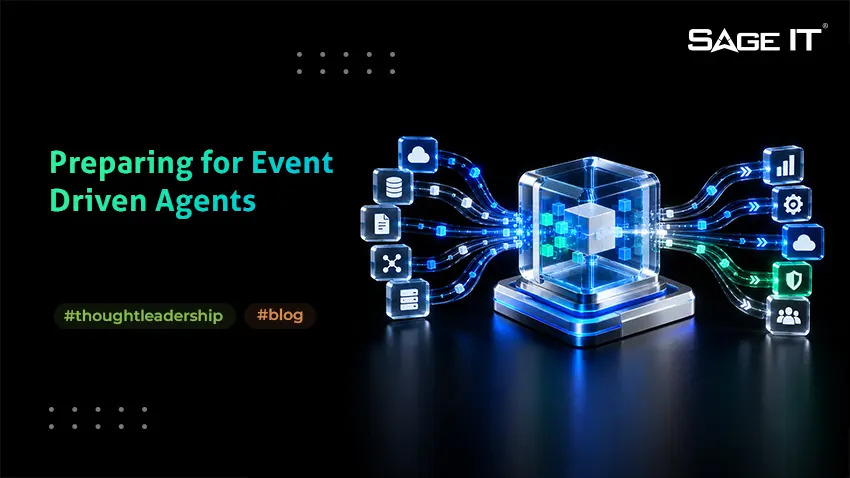
Not a smarter agent inside any one platform, and not a cross-system layer that quietly assumes one platform is the center of the world. What closes the gap is an integration-native action layer that treats NetSuite, Salesforce, ServiceNow, your tax engine and your payment platform as peers, because that is what they are inside your process. It executes the full workflow across all of them, on one set of rules, with one audit trail, and a human in the loop only where the stakes demand it.
The intelligence is commoditizing fast. Within a year, a competent agent will be table stakes on every platform you own. The orchestration that lets those agents act together across the systems you already run, without breaking anything and without surrendering your process to one vendor’s gravity, is the part that is genuinely hard and genuinely worth owning.
What we built NS-AIF to do
NS-AIF, the NetSuite Autonomous Integration Fabric, is that layer, built integration-first rather than platform-first. It anchors where most of our customers already live, in NetSuite, then treats every other system in the process as an equal node on a governed action fabric. For reads and simple writes, an agent reaches a system directly. For anything that crosses systems or carries real financial consequence, the action runs through a governed path with policy and a full audit trail attached to every step. It ships with pre-built order-to-cash and procure-to-pay packages, so your team is running governed cross-system processes in weeks instead of wiring every action and litigating every edge case from scratch. The native agents keep doing what they do well inside their walls. The fabric handles the part none of them owns, which is the process itself.
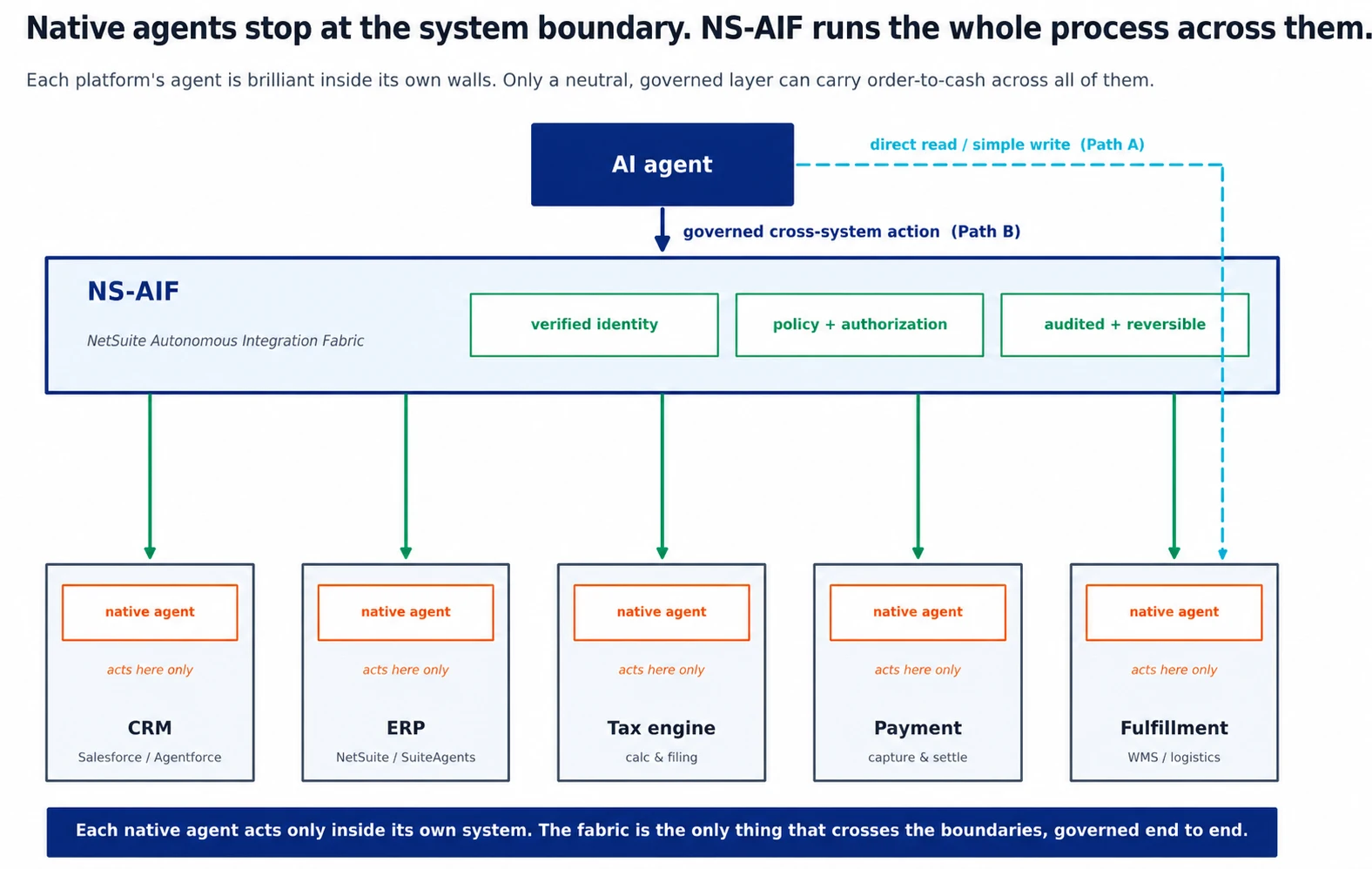
Do not confuse a conversation with a transaction
The native agents will keep getting better at talking and acting inside their own systems. Let them. That is real progress and your teams will feel it. Just be precise about the boundary. An agent inside a platform can complete the part of the work that lives in that platform. Only a neutral layer above your platforms can complete the work that lives between them.
So map one cross-system process you run today. Count the systems it touches. Then ask which single vendor’s agent can carry it end to end without a person stitching the rest together by hand. The honest answer tells you whether what you have is an agent problem or an orchestration problem.