

Most enterprises have spent years adding integration layers on top of integration layers. What begins as a simple SaaS connection gradually becomes a complex web of APIs, middleware platforms, data pipelines, and temporary integrations that somehow became permanent.
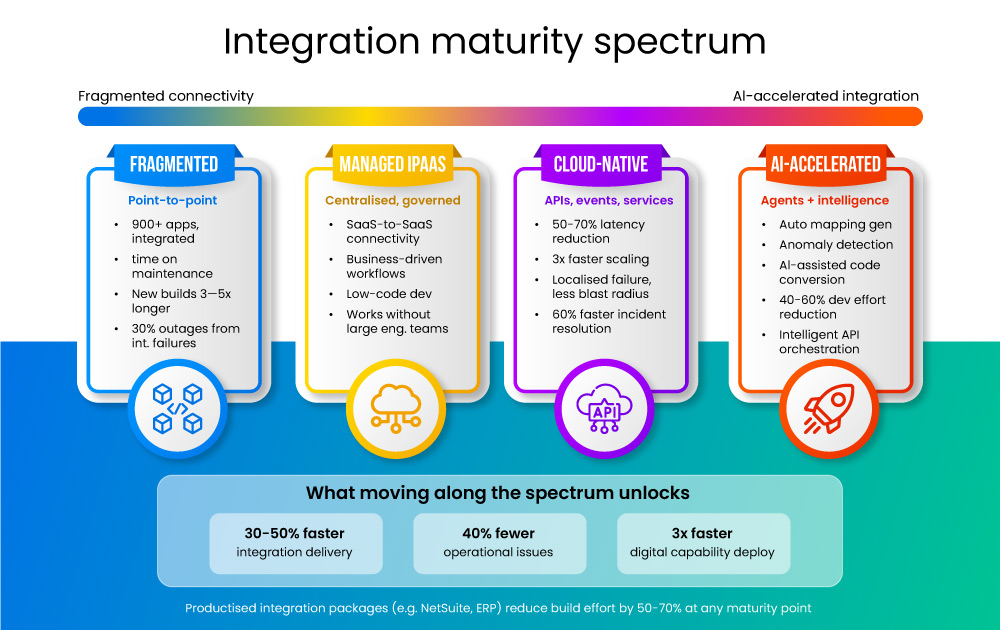
Today, the average enterprise runs 900+ applications, yet fewer than 30% of them are fully integrated across business processes.
When performance issues appear or integrations become difficult to manage, the instinct is often to blame the integration platform itself.
But in most cases, the real challenge isn’t the technology.
It’s the architecture.
At Sage IT, our integration architects frequently observe that many enterprise integration environments evolve without a long-term architectural strategy. Teams focus on solving immediate connectivity needs, but the broader integration ecosystem grows organically without clear ownership, governance, or design patterns.
Over time, the result is an integration landscape that becomes difficult to scale, difficult to observe, and difficult to evolve.
And eventually, every new integration takes longer than the last.
Industry studies show that over 40% of integration development effort is spent understanding existing integrations rather than building new ones.
The Integration Trap
Enterprise integration typically evolves through incremental changes.
A new SaaS platform is adopted.
A connector is created.
Another system needs access to the same data.
A transformation layer is added.
Repeat that process dozens of times across multiple departments and technology initiatives, and what began as a practical solution becomes an architectural maze.
In many enterprises:
At this stage, organizations often consider replacing their integration platform. However, platform replacement alone rarely solves the root problem.
Architecture must evolve along with the technology ecosystem.
Cloud-Native Integration: A Different Model
Modern integration strategies increasingly adopt cloud-native architectural patterns rather than relying exclusively on centralized integration hubs.
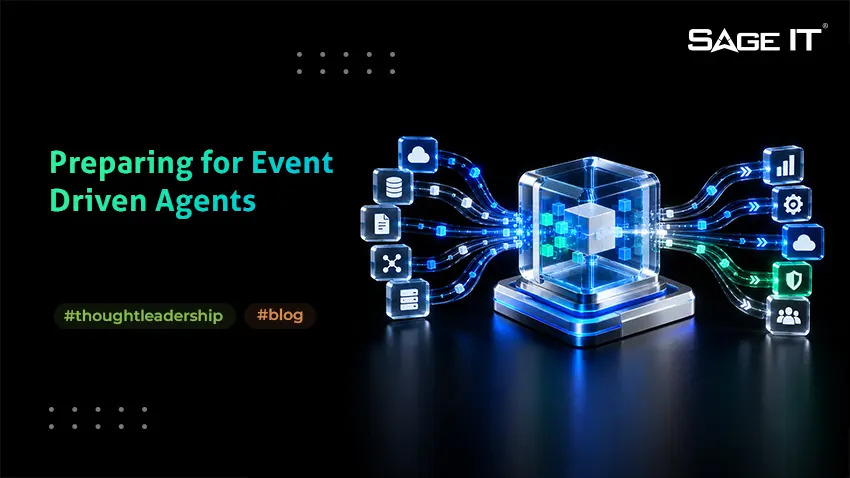
Cloud-native integration distributes integration logic across APIs, microservices, and event streams running within cloud environments such as AWS or Azure.
Instead of routing every integration through a central platform, applications publish events and expose APIs that other services consume as needed.
Organizations adopting event-driven integration architectures often report:
This architectural shift introduces several important advantages.
Clear Ownership
Services own their own APIs and integration contracts. Responsibility becomes distributed rather than centralized within a single integration team.
Localized Failure
Failures remain isolated within individual services rather than impacting unrelated integrations across the organization.
This can reduce enterprise-wide outage impact by up to 40%.
Elastic Scalability
Event-driven architectures scale naturally, allowing systems to absorb spikes in transaction volume without overwhelming centralized integration infrastructure.
Observability
Modern cloud environments provide distributed tracing, structured logging, and event monitoring that make it easier to identify where integration bottlenecks occur.
Organizations implementing modern observability frameworks report up to 60% faster incident resolution times.
When iPaaS Still Makes Sense
Despite the growth of cloud-native integration architectures, iPaaS platforms remain valuable in many enterprise scenarios.
For example:
In fact, many enterprises now adopt hybrid integration strategies, combining iPaaS platforms with API-driven and event-driven architectures.
The goal is not to replace one model with another, but to apply the right integration approach to each use case.
Integration Modernization: Moving from Connectivity to Architecture
At Sage IT, we approach integration modernization as an architectural discipline rather than a tooling decision.
Organizations modernizing their integration ecosystems often see:
Our integration engagements typically focus on three key modernization paths.
Integration Platform Modernization
Migrating legacy middleware and integration platforms toward modern integration ecosystems, including Any-to-SAP BTP migrations and cloud-native integration architectures, is a key part of integration modernization trends.
Cloud-Native Integration Architecture
Designing scalable integration ecosystems using APIs, microservices, and event-driven architectures across AWS and Azure environments.
Productized Integration Solutions
Building reusable integration packages for enterprise platforms such as NetSuite, enabling faster ERP, eCommerce, and payment ecosystem integrations.
These reusable integration packages can reduce integration build effort by 50–70%.
The Next Evolution: AI-Accelerated Integration
Enterprise integration is also entering a new phase driven by artificial intelligence, where AI integration services help teams automate mapping, detect anomalies, and optimize integration workflows faster.
AI technologies are increasingly being used to accelerate integration development and operations through capabilities such as:
Early adopters report:
At Sage IT, we are actively exploring agent-driven integration acceleration, where AI agents assist engineers in designing, validating, and optimizing integration workflows.
Integration Is the Backbone of Digital Agility
Integration architectures determine how quickly organizations can adopt new technologies, connect new partners, and scale digital platforms.
Organizations with mature integration strategies deploy new digital capabilities up to 3x faster than those relying on fragmented integration environments.
When integration is treated as a strategic architectural capability rather than a tactical connectivity task, enterprises gain the flexibility required to support continuous innovation.
Talk to Our Integration Architects
If your organization is planning an integration modernization initiative, evaluating SAP BTP migration, or exploring cloud-native integration architectures, our integration specialists can help.
Sage IT offers structured Integration Modernization Assessments designed to evaluate existing integration ecosystems and define scalable architectural roadmaps.