
Zero Trust in the Age of AI: Rethinking Identity and Access Management for the Next Decade
Introduction: The Digital Playground of Gen Alpha
We stand on the precipice of a new era-the Age of Artificial Intelligence. Generation Alpha, the first cohort born entirely within the 21st century, sees no distinction between physical and digital worlds. They are phygital natives who will inhabit virtual classrooms and entrust their health to algorithms. However, as we hand this generation the keys to a kingdom built on code, we must ask: Is the castle safe?
For decades, cybersecurity relied on the “Castle and Moat” philosophy. We built firewalls around organizations, assuming outsiders were threats and insiders were trustworthy. But in an era where AI can clone a CEO’s voice in seconds and network perimeters dissolve into the cloud, the moat has dried up. To secure the future, we must stop building walls and start building intelligent, adaptive ecosystems.
A Convergence of Discipline: From Networks to Business Strategy
My perspective is shaped by a convergence of technical discipline and business strategy. My academic journey began in Information Technology, where I majored in Telecommunication Technologies (2019-2023), gaining a rigorous grounding in network architecture. As I transitioned into my current MBA with a concentration in Management Information Systems (MIS) at Lincoln University, my focus expanded.
I realized that security is not just a technical puzzle; it is a business imperative. Through my research in Data Science and Machine Learning, I have come to see that the solution lies in fundamentally rethinking the physics of trust. We must embrace “Zero Trust”-not as a policy of suspicion, but as a framework of continuous verification.
The Collapse of Implicit Trust in an Agentic World
To understand why we need a revolution in Identity and Access Management (IAM), we must acknowledge that the adversary has evolved. We are witnessing the rise of Agentic AI-autonomous applications operating at machine speed. Traditional security tools, relying on manual policy updates, are simply too slow to keep pace.
Generative AI has weaponized speed; Large Language Models (LLMs) can now execute complex workflows across clouds in milliseconds. In this volatile landscape, the old adage “trust but verify” is dangerous. It assumes a baseline of safety that no longer exists. The new paradigm must be “never trust, always verify.” However, for Gen Alpha, security cannot come with friction. Consequently, security measures must function as invisible, silent sentinels.
Identity as the New Perimeter
The first pillar of reimagining IAM is the shift from static credentials to dynamic, behavioral identity. The future of Zero Trust understands that identity is not a badge you hold; it is a data pattern you exhibit. Instead of a single gate at login, the system should analyze thousands of data points in real-time.
How fast is the user typing? Is the location logical? If a financial analyst accesses sensitive data at 3 AM, and their mouse movements do not match the microscopic habits of the real user, the AI guardian must immediately lock the session. This advanced liveness detection ensures the entity connecting is the authorized human. This moves us away from vulnerable passwords toward an era where our behavior itself is the key.
The Evolution of Access: From Static Roles to Granular Trust
Zero Trust must extend beyond human users to AI agents themselves. As Agentic AI becomes a distinct asset class, utilizing the same infrastructure as humans, we face unique risks. I observed this vulnerability firsthand during my undergraduate studies while designing a School Relational Database Management System (RDBMS).
The system was built on traditional Role-Based Access Control (RBAC). A teacher, once authenticated, had unfettered access to the entire grading table. If a malicious actor compromised that teacher’s credentials, they could silently alter historical records because the system trusted the role. It lacked the nuance to ask why a teacher was accessing old records at midnight.
In an AI-driven world, this must evolve into dynamic segmentation. If I were rebuilding that system today, trust would be granular. An AI agent summarizing history lessons should not have network visibility into the financial aid database. We must strictly control east-west communication; if a grading agent attempts to access the payroll server, the architecture should instantly sever the connection, regardless of credentials.
Beyond Packets: The Necessity of Semantic Inspection
We must also move beyond simple packet inspection to Semantic Inspection. Current firewalls act like mail carriers who check the address but never read the letter. In the age of Agentic AI, malicious instructions can be hidden within legitimate traffic.
We need security engines equipped with lightweight Natural Language Processing (NLP) models to read the intent of an agent’s request in real-time. This allows the system to enforce guardrails-automatically blocking an agent if it attempts to exceed its role. For example, if a customer service chatbot suddenly begins executing SQL injection commands, the semantic inspector recognizes the contextual anomaly. This is the new definition of Least Privilege: ensuring agents have access only to what they need, preventing lateral movement.
The Privacy Paradox: Balancing Surveillance and Safety
Implementing this Silent Sentinel approach introduces a profound ethical dilemma: the Privacy Paradox. If every digital breath is measured to prove identity, do we risk creating a surveillance state?
To prepare for the digital decade, we must solve this through Privacy-Preserving Analytics. We must develop systems that tokenize behavioral patterns rather than storing raw data. This aligns with Zero-Knowledge Proofs (ZKP), a cryptographic standard that allows a system to verify the truth of a statement (e.g., this user is authorized) without revealing the underlying data. By decoupling verification from data exposure, we achieve maximum security with minimum surveillance. For Gen Alpha, trust in the system will depend on its ability to protect their identity, not just their accounts.
The Human Element: “In the Loop” and “Over the Loop”
Technology is only half the equation. We must also redefine the human role. We need rigorous Agent Onboarding workflows where the human user remains in-the-loop, explicitly authorizing an agent’s scope before deployment. Once operational, the human role shifts to being over-the-loop, supervising automated processes rather than intervening in every transaction.
For Gen Alpha, digital literacy must expand to include verification literacy. We must teach the next generation how to govern AI. In the workplace, this means pivoting to security behavior design, where interfaces clearly explain why an agent’s request was blocked. This transparency builds a culture of confidence-a key competitive advantage.
Real-World Applicability: A Vision of 2035
Let us visualize how this safeguards society. Consider the healthcare sector in 2035. A patient wears Internet of Things (IoT) sensors-interconnected smart devices that continuously capture and transmit real-time physiological data-monitoring their heart condition. In a Zero Trust world, this stream is subject to semantic inspection. The agent accessing the data is verified by its behavioral signature. If a cybercriminal attempts to inject false data, the security layer detects the semantic anomaly and isolates the corrupted packet instantly. The patient’s life is protected not by a firewall, but by an intelligent ecosystem of validation.
Conclusion: From Blind Trust to Verified Confidence
The theme of this challenge asks us to rethink Identity and Access Management for a decade shaped by AI. The paradox is this: to build a world where we can trust our technology, our systems must trust no one. Zero Trust is the enabler of the AI revolution; it is the seatbelt allowing us to drive the car of innovation at speed.
With my background in Information Technology and MIS, I have learned that sustainable progress comes from aligning innovation with integrity. AI agents can predict and optimize, but they must operate within a framework of rigorous verification. We are building the digital infrastructure for the next century. It must be resilient, adaptive, and secure. The age of AI is here. It is time to verify, so that we may finally, truly, trust.
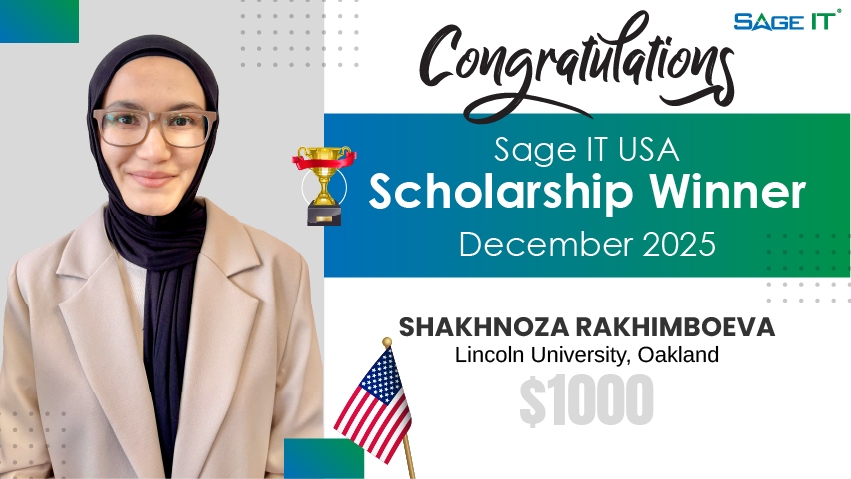
Written by,
Shakhnoza Rakhimboeva
Lincoln University, Oakland