
You cannot fully prevent prompt injection, so the practical defense is to limit what a successfully injected agent can do. Detection alone is unreliable, especially for indirect injection, where the NIST generative AI profile notes malicious instructions can ride inside otherwise trusted data. Combine input and content filtering with execution-layer controls: least-privilege roles, scoped per-action tokens, deny-by-default policy gates, and human approval on consequential writes, so an injected instruction has no standing credential and no unattended path to a system of record. Because model-side filters can be bypassed, the enforceable boundary belongs at the point of action.



About Us
For over two decades, Sage IT has been the trusted partner enterprises rely on to move faster, operate smarter, and scale with confidence. Spanning agentic AI, intelligent integration, data, cloud, and enterprise applications, Sage IT delivers production-ready transformation, not just strategy. Real McC.AI™, its enterprise AI platform, bridges the critical gap from pilot to performance. With clients across NA, Europe, and APAC realizing measurable benefits 30% faster, Sage IT combines deep technical expertise with an AI-ready workforce, proven accelerators, and responsible AI governance to deliver outcomes that are pragmatic, auditable, and built to last.
Awards





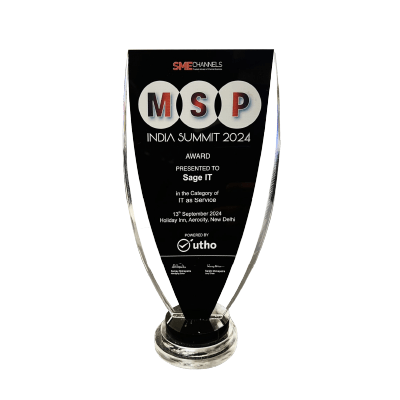



Certificates


Member



Collaborative Social Responsibility


Socialize


© Copyright Sage IT. All rights reserved