
AI security protects models and their outputs, while AI agent security protects the actions an agent takes across enterprise systems. Traditional AI security covers model robustness, data poisoning, bias, and content safety. Agent security adds identity, least-privilege authorization, credential and token handling, real-time policy enforcement, human approval, and action-level audit, because an agent can read, write, and transact rather than only generate text. The distinction matters as agents spread: Gartner projects 40% of enterprise applications will embed task-specific AI agents by the end of 2026, up from less than 5% in 2025.



About Us
For over two decades, Sage IT has been the trusted partner enterprises rely on to move faster, operate smarter, and scale with confidence. Spanning agentic AI, intelligent integration, data, cloud, and enterprise applications, Sage IT delivers production-ready transformation, not just strategy. Real McC.AI™, its enterprise AI platform, bridges the critical gap from pilot to performance. With clients across NA, Europe, and APAC realizing measurable benefits 30% faster, Sage IT combines deep technical expertise with an AI-ready workforce, proven accelerators, and responsible AI governance to deliver outcomes that are pragmatic, auditable, and built to last.
Awards


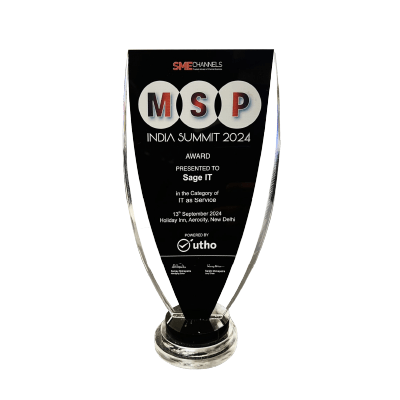



Certificates

Member



Collaborative Social Responsibility

Socialize


© Copyright Sage IT. All rights reserved